




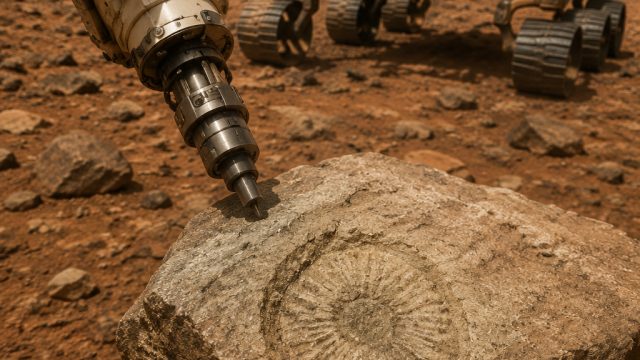
The quest to understand Mars and its potential to harbor life has reached a thrilling chapter, thanks to NASA's Perseverance rover. Recently, scientists revealed that the rover has discovered what they believe to be potential biosignatures, indicating that ancient microbial life may have existed on the Red Planet. This remarkable finding not only deepens our understanding of Mars but also raises exciting questions about the existence of life beyond Earth.
In September 2025, the Perseverance rover collected a sample from a Martian rock known as Cheyava Falls. Analysis of this sample suggests the presence of organic carbon and evidence of ancient water. These findings are some of the most compelling indicators yet of life that once thrived on Mars.
Biosignatures are substances or patterns that provide evidence of past life. The detection of complex carbon molecules in the Martian soil is crucial because:
The historical presence of water on Mars is a significant factor when considering the planet's potential for supporting life. The samples from Cheyava Falls indicate that ancient water might have played a crucial role in the development of organic compounds.
Water is essential for life as it serves as a solvent for chemical reactions. The evidence of ancient water allows scientists to theorize that:
This discovery paves the way for future missions to Mars. Understanding the past microbial life forms can help scientists design missions aimed at discovering living organisms in Mars' current environment.
With the Perseverance findings, future explorations could focus on:
The implications of these findings extend beyond just planetary science; they tap into a broader quest to answer one of humanity's oldest questions: Are we alone in the universe? This exciting discovery will likely spur collaboration among space agencies, research institutions, and universities worldwide.
The interest generated by such discoveries can significantly influence funding and support for space exploration. A few ways to engage the public interest include:
As NASA's Perseverance rover continues its mission on Mars, the potential discovery of ancient microbial life marks a pivotal moment in our exploration of the cosmos. These findings not only shine a light on Mars' past but also inspire humanity to look toward the stars with curiosity and hope. The journey of discovery is just beginning, and the implications could shape our understanding of life on Earth and beyond.

Scan to connect quickly

Get a free website and SEO planning proposal

Phone: +62 844 1536 9382
Address: Jl. Ahmad Yani No. 103, Bandung 40115, West Java, Indonesia
Email: rekhamonikaraja@gmail.com

 +62 844 1536 9382