
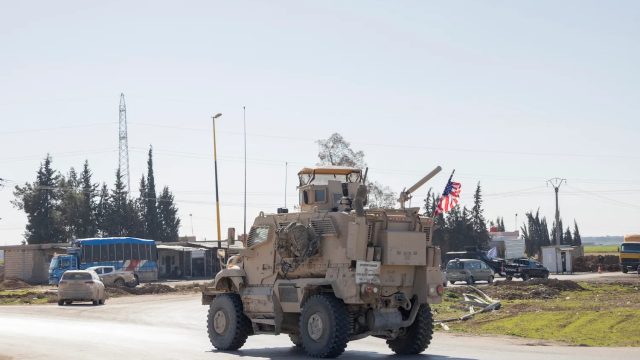
The ongoing complexities of U.S. military involvement in the Middle East have sparked contentious debates among policymakers and military experts. This discourse has become particularly urgent as the geopolitical landscape continues to shift dramatically. A critical evaluation of the consequences of U.S. intervention reveals how such strategies may be undermining rather than enhancing regional stability and the free flow of energy resources.
Historically, the rationale behind the U.S. military presence in the Middle East has centered on ensuring security and stability—yet evidence suggests these efforts often produce the opposite result. For instance:
Rather than securing the uninterrupted flow of vital resources like oil, the military footprint in the region has contributed to a precarious situation for global energy supplies. The U.S. must reassess its approach to avoid perpetuating cycles of violence and instability.
At the heart of U.S. military engagement in the Middle East is energy security. However, the current strategy may be counterproductive, causing volatility in oil markets and affecting global prices. For example, disruptions in areas such as Hormuz have led to fluctuations that ripple through the economy.
To achieve true energy security, it might be time to pivot from military might to diplomatic measures. Key components of a new approach could include:
These strategies not only promote stability but also encourage cooperation over coercion, fostering a more sustainable approach to foreign policy.
With the rise of new geopolitical players and the evolution of global energy markets, the urgency to rethink U.S. strategies in the Middle East has never been greater. As nations grapple with climate change, energy transitions, and new economic realities, the potential for conflict remains high without a reassessment of existing policies.
Several global trends are reshaping the context in which U.S. military strategy must operate:
These trends suggest a diminishing role for traditional military presence as a tool for securing national interests. Instead, they highlight the necessity for innovative solutions that prioritize collaboration and shared prosperity.
The time has come for a fundamental shift in how the U.S. engages with the Middle East. By moving towards a strategy that emphasizes diplomacy and economic cooperation, the U.S. can foster a more stable and secure environment. This transition is crucial not only for U.S. national interests but also for the broader goal of sustainable global energy security.
In conclusion, re-evaluating the U.S. military presence in the Middle East is not merely a tactical adjustment; it is a necessary evolution in response to the complexities of today’s geopolitical challenges. Embracing a forward-thinking and cooperative approach can lead to a more peaceful and prosperous future for the region and the world.

Scan to connect quickly

Get a free website and SEO planning proposal

Phone: +62 844 1536 9382
Address: Jl. Ahmad Yani No. 103, Bandung 40115, West Java, Indonesia
Email: rekhamonikaraja@gmail.com

 +62 844 1536 9382