
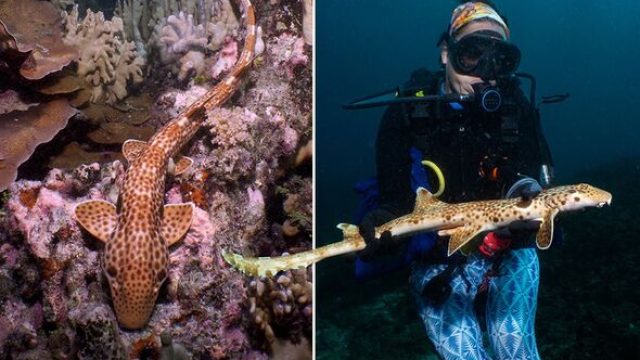
In a remarkable scientific revelation, researchers have announced the discovery of a new species of shark in the waters of Papua New Guinea. Unlike any other shark species, this unique creature has evolved the ability to venture onto land, using its fins to drag most of its body out of the water. This astonishing adaptation not only highlights the incredible diversity of marine life but also raises urgent conservation concerns as the species faces threats to its survival.
This newly identified species, which has been dubbed the "walking shark," manifests an extraordinary capability that challenges our understanding of marine biology. Its evolutionary adaptations allow it to navigate shallow waters and even maneuver onto land to hunt for prey. Such behavior is rare among shark species and serves as a fascinating case study for evolutionary biologists.
The walking shark has been discovered in the coral reefs and coastal regions of Papua New Guinea, an area renowned for its rich biodiversity. The unique environmental conditions here have facilitated the development of this unusual species, which thrives in shallow waters. Unfortunately, the same habitats that support this shark are under threat from climate change, pollution, and overfishing.
As intriguing as this discovery is, it does not come without concern. Scientists warn that the walking shark is at a significant risk of extinction due to multiple environmental threats. The main factors contributing to its precarious status include:
With the ongoing degradation of marine environments, the survival of the walking shark serves as a poignant reminder of the urgent need for conservation efforts. Protecting this species not only aids in maintaining biodiversity but also ensures the health of marine ecosystems. Each species plays a vital role in its habitat, and the loss of one can have cascading effects on the entire ecosystem.
Individuals and communities can contribute significantly to conservation efforts. Here are a few ways to get involved:
The discovery of the walking shark species in Papua New Guinea opens a new chapter in our understanding of marine life and evolution. However, it also raises critical questions about our responsibility to safeguard such unique creatures. As we delve deeper into the mysteries of our oceans, it becomes increasingly clear that conservation must take center stage. By taking proactive steps, we can ensure a future where the walking shark and countless other species can thrive in their natural habitats.

Scan to connect quickly

Get a free website and SEO planning proposal

Phone: +62 844 1536 9382
Address: Jl. Ahmad Yani No. 103, Bandung 40115, West Java, Indonesia
Email: rekhamonikaraja@gmail.com

 +62 844 1536 9382